
This post includes copies of the exhibition panels from the Ashford General Strike Centenary Exhibition. Some panels are included entirely as images. We are in the process of extracting text from the panels.
The 100th Anniversary of the General Strike,
May 1926
This exhibition explores Britain’s only national general strike, from its roots in the coal crisis to its impact on everyday life. Over nine days in May 1926,millions of workers withdrew their labour in support of locked out miners. Using national context and the local experience of Ashford, the panels show how the strike was organised, how communities responded, and why it remains a powerful moment in working class and trade union history.
Nine days that stopped Britain
4–12 May 1926: the only national general strike in British history
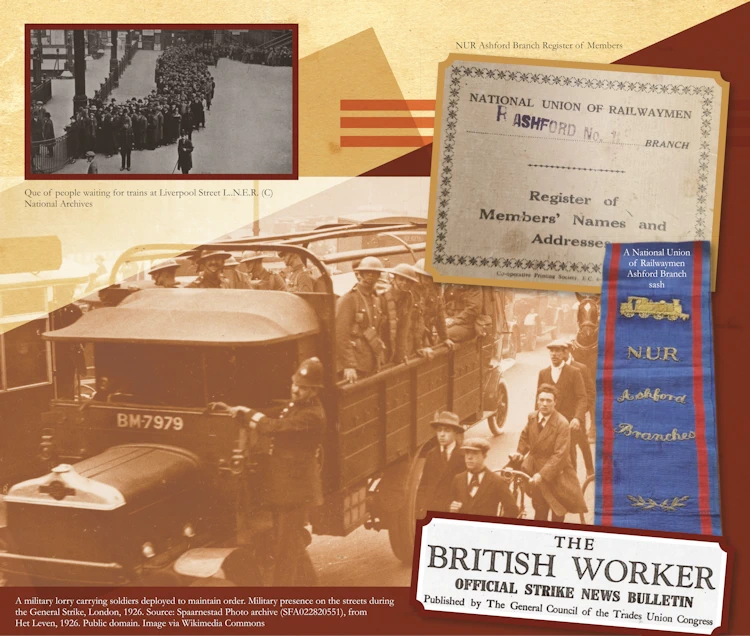
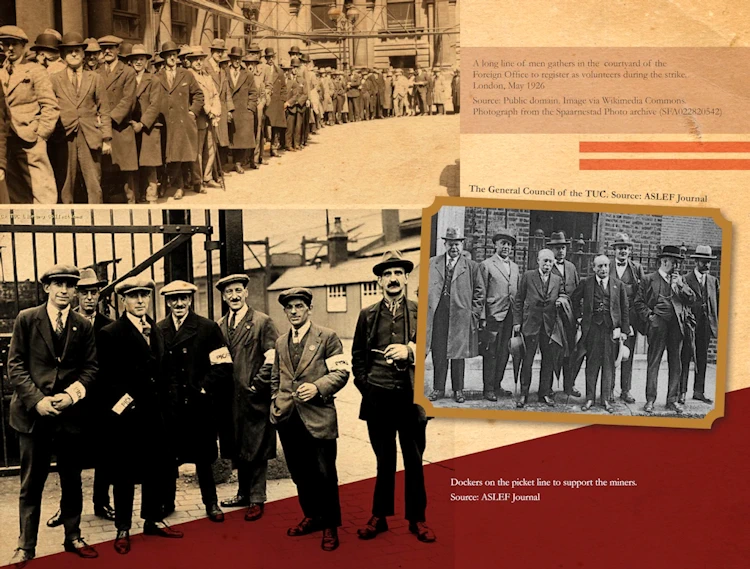
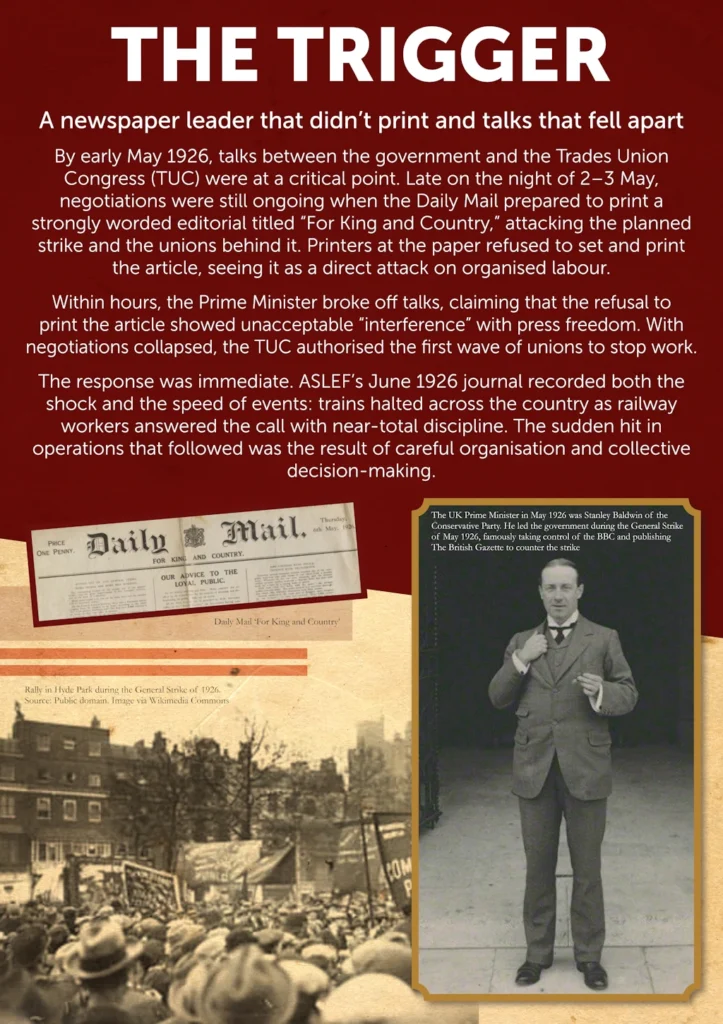
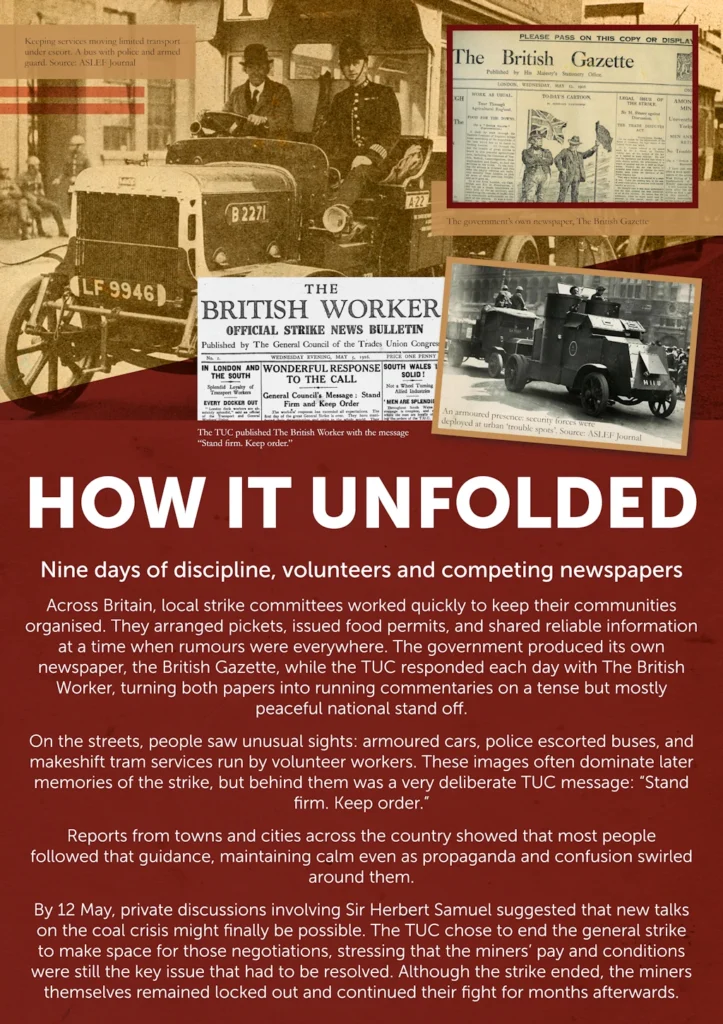
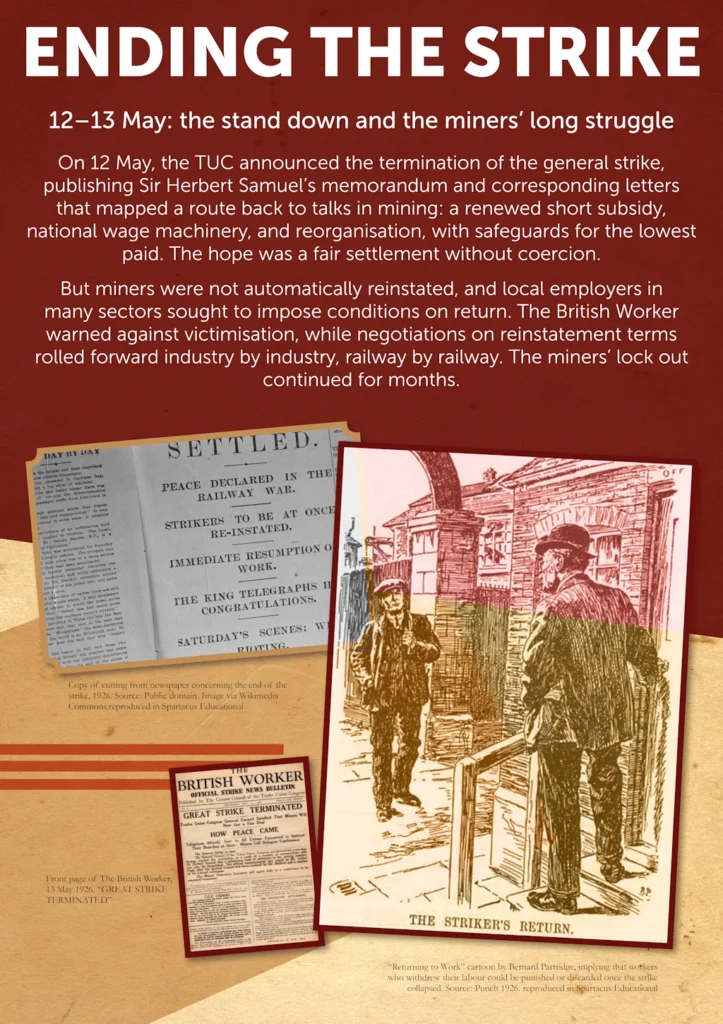
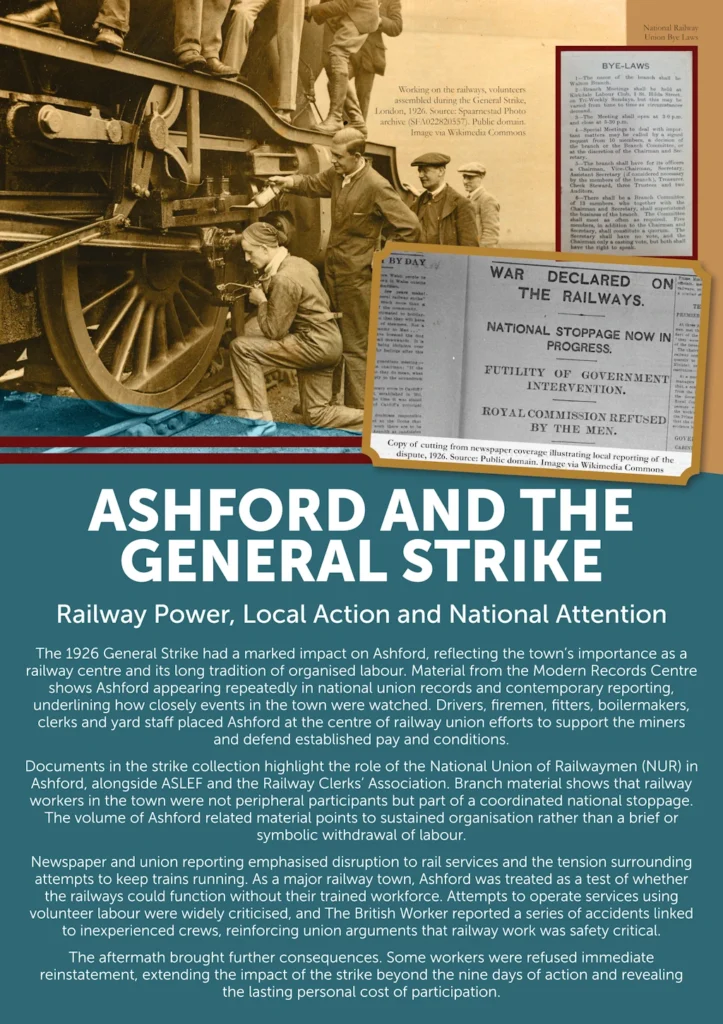
Just before midnight on 3 May 1926, Britain’s main trade union body, the Trades Union Congress (TUC), called on workers across the country to stop work. They were backing more than a million coal miners who had been locked out after refusing pay cuts and longer hours. By the next morning, around 1.5–1.7 million people, including railway workers, dockers, printers and engineers, had joined the strike.For nine days, the country fell unusually quiet. Trains stopped, newspapers were limited,and streets were calmer than normal. The government had prepared extensively, recruiting volunteer workers to keep basic services running and deploying police and, in some areas,the army. The TUC repeatedly urged calm and discipline, and most communities remained peaceful.The strike ended on 12 May when the TUC believed renewed talks over coal were possible. The miners’ lockout, however, continued for months. Those nine days left a lasting memory as one of the largest acts of industrial solidarity in British history.
Coal at the heart of it
Why miners’ pay and hours became a national question
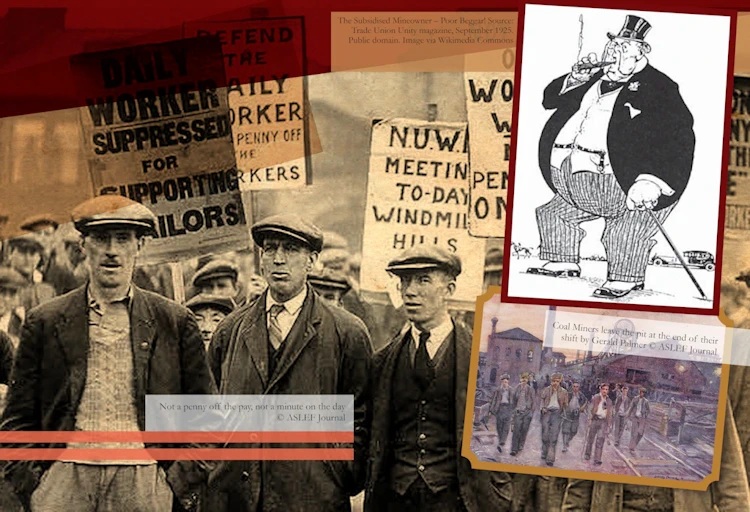
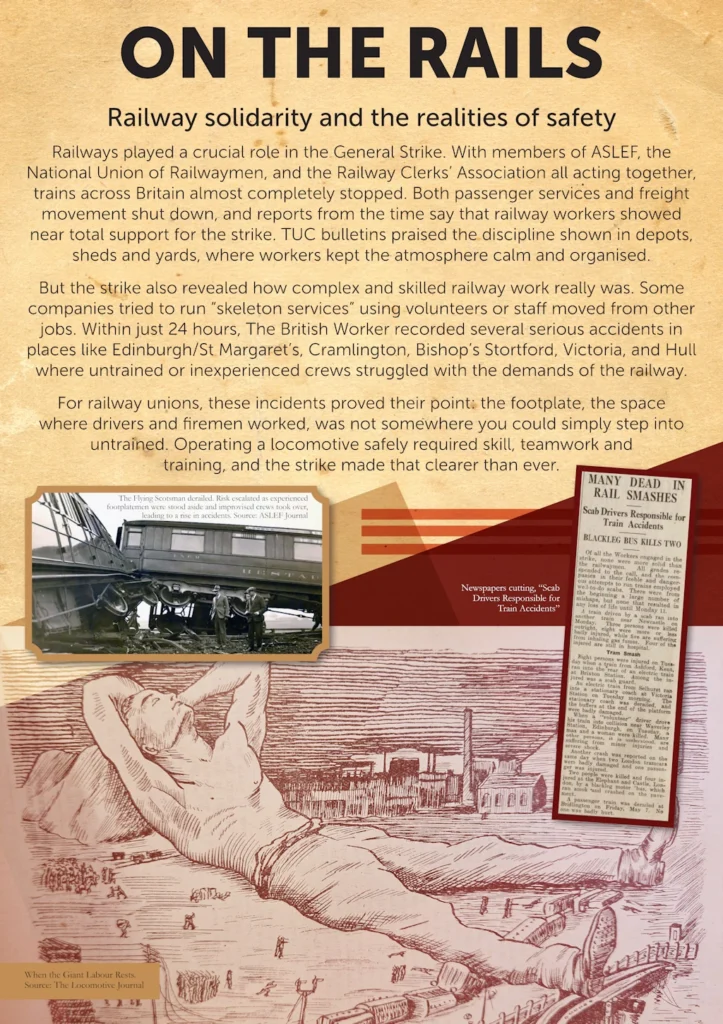
In the early 1900s, Britain depended on coal for almost everything, including heatinghomes, powering factories, and running the railways. But the coal industry was in trouble.Many of the best coal seams (a natural layer of coal within the ground) had been heavilydug during the First World War, and owners had not invested in new technology. Othercountries, like Germany, the United States and Poland, were selling cheaper coal, andwhen Britain returned to the Gold Standard in 1925, it made British exports even moreexpensive. As profits fell, mine owners pushed for longer hours and lower pay.By 1926, miners were earning far less than before the First World War. They rememberedthat during wartime state control, conditions had briefly improved. Now they wanted fairwages and national agreements that would protect them. Their slogan “Not a penny offthe pay, not a minute on the day” showed they felt they had already given up too much.For railway towns like Ashford, this wasn’t just a mining issue. Coal powered the locomotivesthat Ashford’s engineers repaired and its drivers operated. So when miners faced wage cuts,the effects spread quickly. A fight over pay hundreds of miles away could change workshopschedules, reduce overtime, or cut into family incomes. Coalfields and rail towns weretightly linked if miners were under pressure, railway communities felt it too.
From ‘Red Friday’ to the Samuel Commission
Subsidy, inquiry and a fragile runway to reform (1925–26)
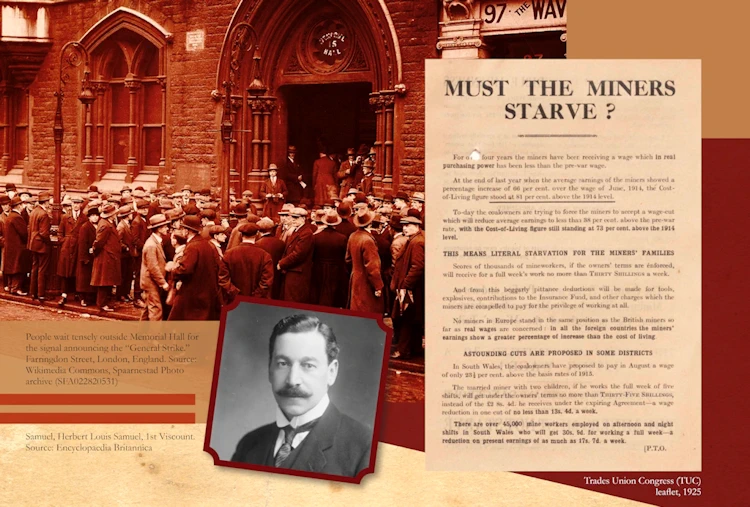
In July 1925, something happened that people later nicknamed “Red Friday.” The
government wanted to avoid a major clash with coal miners, so it agreed to give the industry a temporary subsidy, to keep miners’ wages at their current level. At the same time, it set up a Royal Commission, led by Sir Herbert Samuel, to investigate how to fix the struggling coal industry. The idea was that everyone would have time to come up with long term solutions before the subsidy ran out on 30 April 1926.
When the Commission finally reported back, it suggested big changes: reorganising the
industry, modernising it, and creating a national system for setting wages. But the report also left room for temporary pay cuts while these reforms were put in place. Miners didn’t trust this. They didn’t want to accept lower wages now in exchange for promises of improvements later, especially after years of falling pay. Mine owners, meanwhile, pushed ahead with plans to introduce new, lower paid contracts.
As the deadline approached, tensions rose. The Trades Union Congress (TUC) began
preparing to support the miners if wage cuts were forced through. Railway and transport unions agreed they would stand with them.
By early 1926 it was clear that neither side would back down. Britain was heading for a major industrial showdown focused on fair pay and conditions.
Leave a Reply