
1911 – 1964
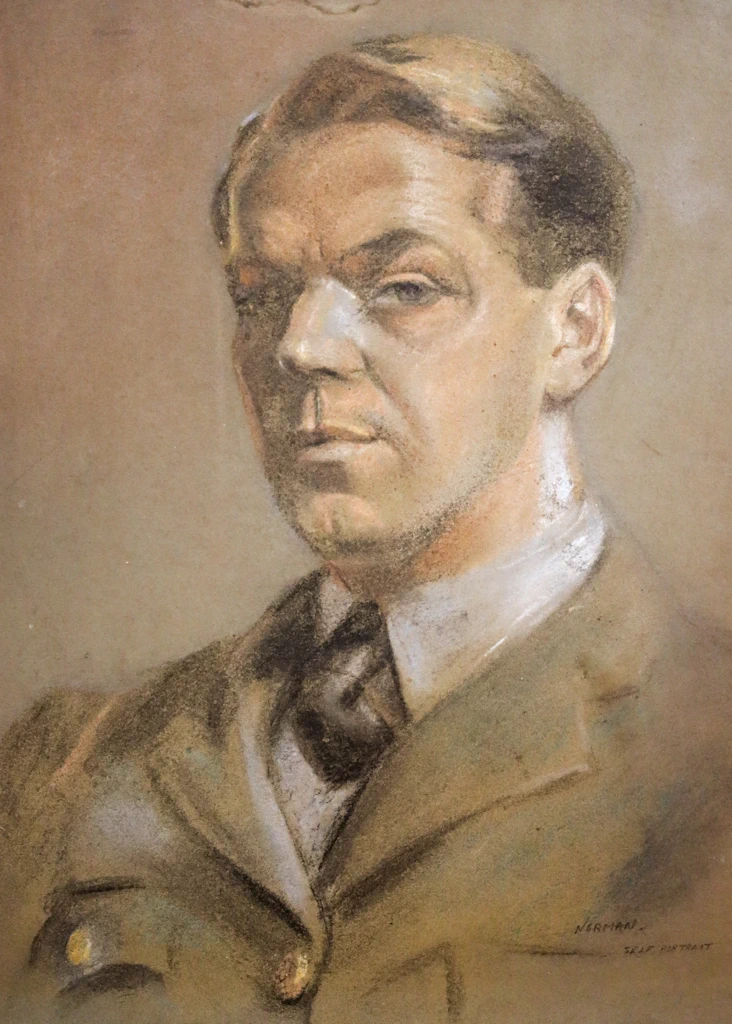
Percival Edward Norman was a twentieth century polymath; an artist, model-maker, silver-smith, sculptor, designer, inventor, teacher, violin maker and player.
He was a brother of Charles and Frederick Norman, the founders of Norman Cycles and spent his early life in Ashford.
Percival Edward Norman (PEN) was born on 25th November 1911, at 14 Regents Place, Ashford, Kent. He was the youngest of six surviving children of George and Eleanor Norman. George, a brickmaker, was foreman of a local brickyard. In 1919, the family moved to a house, which George had built himself, in Jemmett Road Ashford. The two eldest children, Charles and Frederick, were WW1 fighter pilots. After the War, the two brothers founded the successful, family-run Norman Cycles.
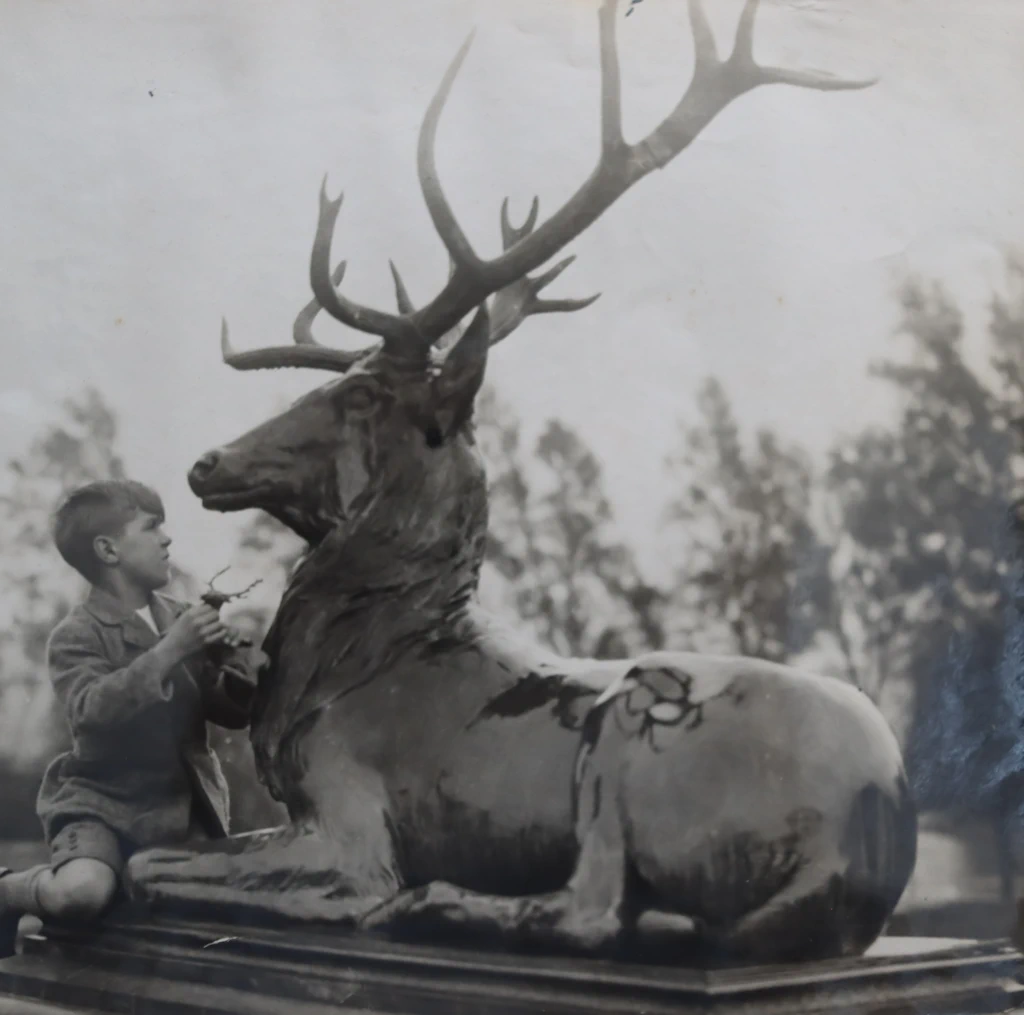
As a very young child, PEN displayed a remarkable talent for modelling, firstly using his mother’s baking dough and later, working in plasticine. In 1921, then aged 9, he was invited to exhibit his work at the Dorien Leigh Galleries in South Kensington and attracted much interest from the Press who recognised him as a ‘genius’.
POOR BOY GENIUS. WONDERFUL SCULPTURE BY AN UNTRAINED NINE-YEAR.OLD. A boy of nine with wonderful artistic talent has been discovered in the town of Ashford, Kent. He Is Percy Norman, and some of his sculptures and drawings are now at the Dorien Leigh Galleries, South Kensington, where an exhibition of children’s work opened today. His plasticine models of animals are quite as finished, according to an art teacher, the best work of clever students eight or nine years older. “Percy is quite a poor boy” one of officials of the gallery said, “and goes to a Council school. He has had no training which makes his work all the more remarkable. On the rare occasions on which he is taken to London he heads straight to the Zoo. He began to try to make things when quite a baby. He has genius, and it will be a pity if, through lack of assistance, he Is not given every chance.” (Pall Mall Gazette 15.11.1921)
In 1924, aged 12 years old, PEN was the youngest exhibitor at the British Empire Exhibition held at Wembley. The ‘Daily Chronicle’ (May 2nd 1924) commented on his models as ‘remarkable’ again referring to him as a ‘Child Genius’.
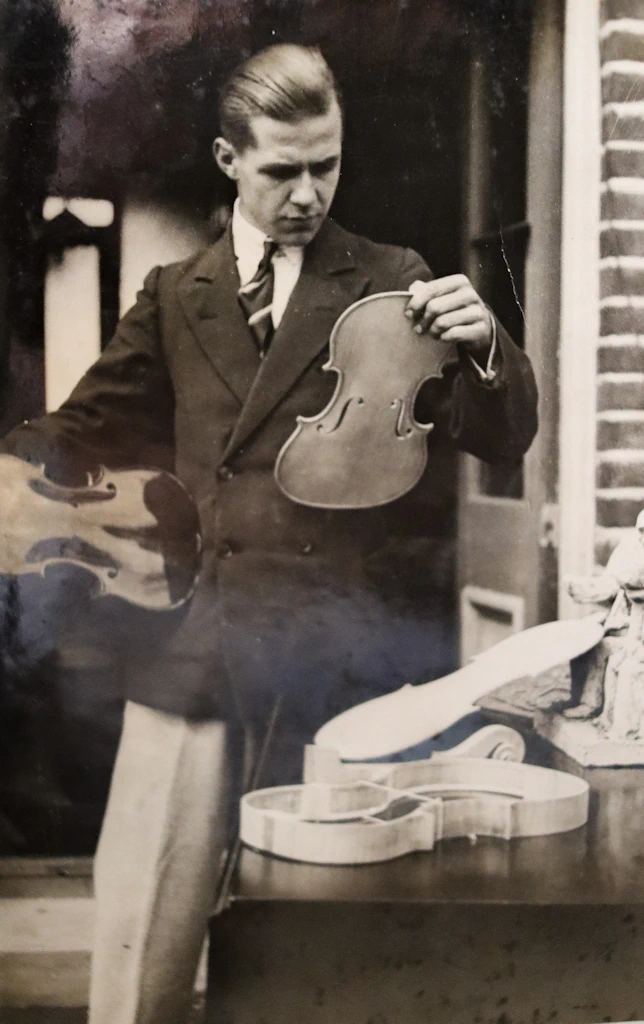
Besides his artistic talent, PEN was talented musically. He started violin lessons at six years old. During his adolescence he competed and won many competitive music festivals and was often requested to play at local events and functions within the community. At 11, he was offered a Canterbury Cathedral Choral Scholarship as well as a Free Place at Ashford Grammar School. His parents chose the latter believing it would offer him a better all-round education.
After school, PEN was awarded a scholarship to attend Maidstone School of Art where he studied Industrial Art and Design. In 1933, he was awarded a further scholarship to study at the Royal College of Art in the School of Design where Eric Ravilious, Edward Bawden and John Nash, taught all of whom had a great influence on PEN. Three years later he gained his ARCA Diploma in Silverwork also winning the Goldsmith Company’s Award which enabled him to continue his studies for a further year. Graduating from the Royal College in 1938, PEN worked briefly for Vauxhall Motors designing Bedford Trucks but on the sudden death of his father, he returned to Ashford to look after his mother and taught part-time at Maidstone and Rochester Art Schools.
In Autumn 1939, with War imminent, many schools were evacuated from London and the Mary Datchelor School in Camberwell relocated to Ashford. A young Music teacher, Phyllis Robinson, was transporting musical instruments from Camberwell to Ashford by car when she had a road accident. Her cello was damaged and PEN was recommended as someone who could repair it, which led to their courtship. Phyllis was a talented musician, a Pianist and Cellist, who had recently graduated from the Royal College of Music.
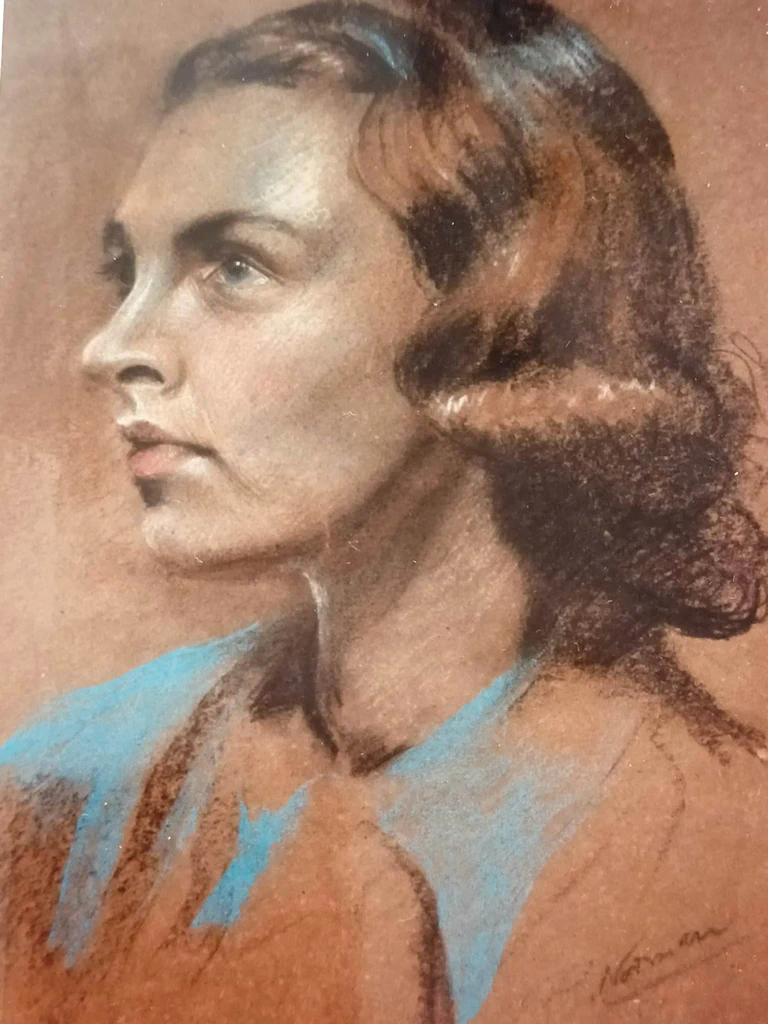
By July 1940, with frequent bombing raids on the south coast, the Mary Datchelor School was once again evacuated, this time to Llanneli in Wales. In late August, PEN was called up for War Service, and, uncertain of what their future, Phyllis and PEN became engaged. He joined the RAF wishing to be a pilot, like his brothers. However, his ambition was thwarted as earlier that year he had suffered a serious dose of Pneumonia and collapsed lung, which rendered him unfit for pilot training. He was assigned to No. 12 School Technical Training, initially based at RAF Weedon, Blackpool and in November he was transferred to RAF Melksham in Wiltshire where eventually became an Instructor in Technical Training, working on aircraft instruments and radar.
Despite the distance between them, Phyllis and PEN, continued their relationship, communicating frequently by letter and seeing one another whenever possible. In 1942 Phyllis took up a teaching post in Marlborough, and they married in December that year. After the War, they set up home in Banstead, Surrey, where they had three children.
On joining the RAF, PEN’s talents for both drawing and playing the violin were quickly noticed. He was requested to do aircraft drawings and also to illustrate the effects of Veneral Disease on the body. These were exhibited to RAF personnel where viewing was strictly segregated between the sexes. The drawings were later published in a Medical Journal. PEN’s talent for drawing portraits was also soon realised by officers and fellow airmen and became a lucrative source of income as he would charge according to rank. His violin playing was requested at Church Services and in the Officers Mess . He joined the Camp orchestra which performed at concerts in Melksham, Trowbridge and other nearby Camps and he entertained Queen Mary on a visit to the Camp in 1942. At one point he wrote to Phyllis that ‘I must be the busiest man in the Airforce’ and, ‘if I had played the double-bass maybe I would be Vice Marshall by now”.
Whilst at RAF Melksham PEN met a fellow artist, Frank Wootten, who became an official War Artist and life-long friend. Frank’s work inspired PEN to later produce several remarkable aircraft paintings, and landscapes of the Sussex Downs.
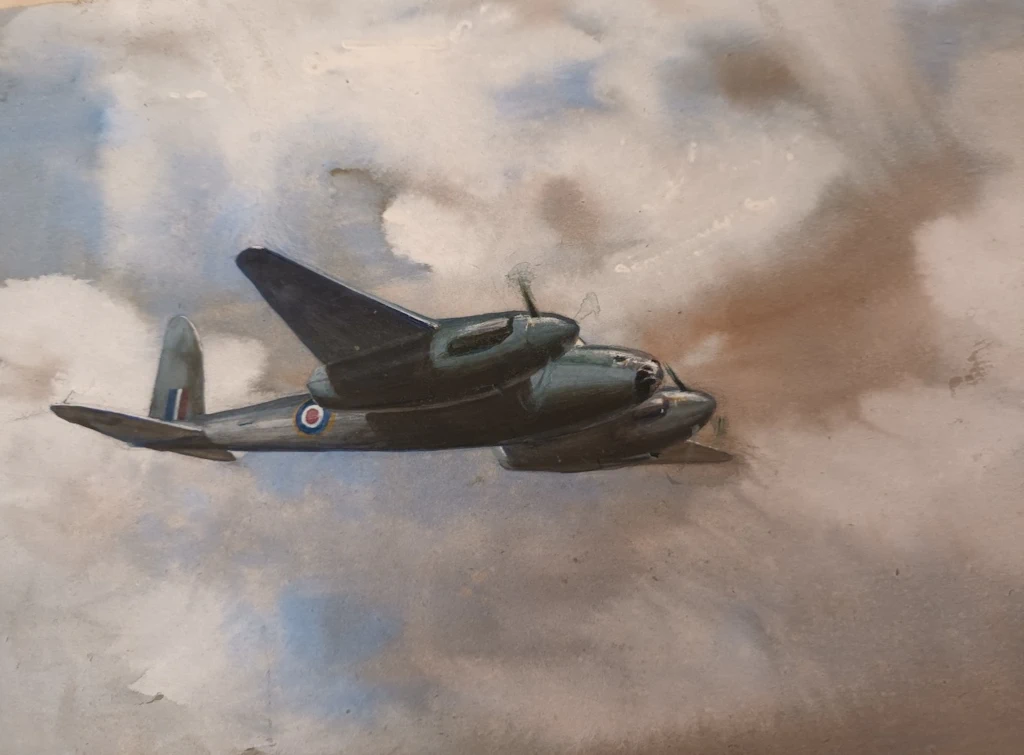
PEN first exhibited at the Royal Academy’s Summer Exhibition in May 1941, having sought permission from RAF Melksham to take his exhibits to the Royal Academy during the London Blitz, for display. He exhibited again on at least five further occasions both during the 1940s and 1950s and at a number of exhibitions around the country including The Festival of Britain, held on London’s South Bank in 1951.
During the 1950s, PEN taught part-time at Maidstone and Tunbridge Wells Schools of Art, whilst Phyllis taught part-time at Nonsuch school in Ewell and, later, at The Godolphin and Latymer school in Hammersmith. PEN conveyed his brilliance and enthusiasm to the younger generation by whom he was well respected both by students and fellow members of staff. At Maidstone, he and his students made a complete small-scale, fully-working replica of Guttenburg’s Printing Press which was displayed at the Maidstone Museum and at the College of Printers in London.
PEN’s artistic and musical talents knew no bound: modelling, painting, sculpting, jewellery-making, stained glass, designing, inventing, toy, and furniture making. He sculptured in stone, wood, ivory, metal, silver, copper, and Perspex. He made and flew model aircraft and also crafted nine violins and a viola on which he played, accompanied by his wife, at over 200 competitive music festivals at venues where, more often than not, he would win First Prize.
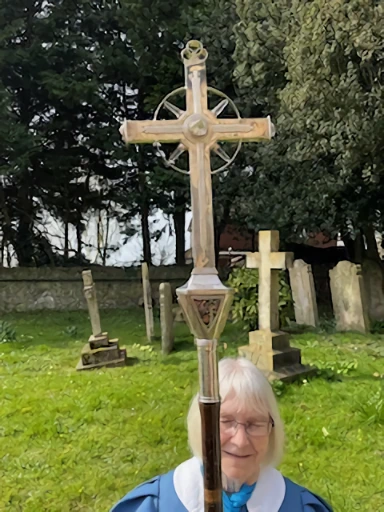
PEN worked on several commissions amongst which was a wooden carving of St. George and the Dragon which is displayed in Mayfield Church in East Sussex; a Silver Processional Cross which is still in use at Great Chart Church, near Ashford; he carved a mouse for the artist Terence Cuneo’s Rolls Royce which was cast in bronze and placed on the bonnet; Aintree Racecourse commissioned him to submit designs for the Topham Trophy using a variety of mediums including silver and Perspex; in 1960, he was commissioned to do some carvings for the ocean liner, the Queen Mary and, in 1961 Vickers-Armstrong commissioned him to do some animal drawings for display in the dining room of the newly built round-the-world cruise ship, SS The Northern Star.
In addition, he wrote three books: Clipped Wings: The diary of the life of an unrecognised airman’ a cartoon book about life in the RAF (Published by J. Salmon Ltd, 1942); Toys for Boys ((Published by The Studio Publications, 1953) demonstrating making toys from cotton reels; Sculpture in Wood (Published by The Studio Publications, 1954). He also contributed several articles to ‘The Studio’ Magazine. PEN was never idle except when going to concerts of the cinema which he loved.
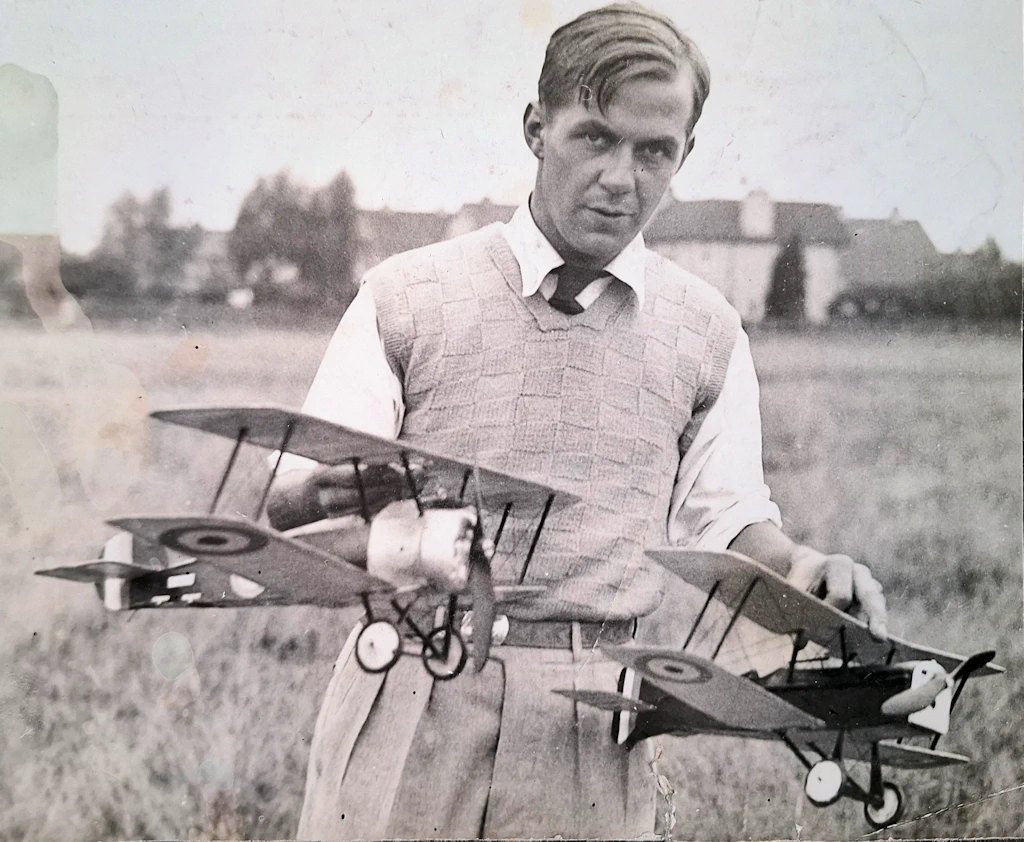
PEN’s greatest passion was designing, making and flying model aircraft. He was fascinated by the planes his elder brothers had flown during WW1. Whilst living in Ashford, he would fly his models on the Kent Downs and during the war he made gull-winged gliders. In 1942, one of his gliders, which had a nine-foot wing span achieved a World Record after flying from Dunstable Downs to Fulham in three hours 40 minutes. In the 1950s and early 1960s PEN was a familiar figure flying his models on Epsom Downs where he would be surrounded by fascinated aeromodelling enthusiasts. His notoriety for designing and building model aircraft was such that he was, and still is, a legend amongst the Model Aircraft fraternity where he is known simply as ‘PE.’ Using the knowledge he had gained whilst in the RAF, he invented and built the first pendulum control ducted fan engine which enabled his model aircraft to fly and return to base rather than landing at random. A Pathe Newsreel, filmed in the 1950s, shows PEN flying his models on Epsom Downs. His detailed hand-drawn plans were submitted to various English and American aeromodelling magazines, including ‘The Aeromodeller’, ‘Flight’ and ‘Model Aircraft’ and several photographs of his aircraft paintings were pictured on the covers of these magazines. His plans are still sought-after and obtainable on the internet.
In 1961, PEN suffered a stroke which temporarily paralysed his left side. However, he recovered well enough to continue his artistic and creative work and to fly his model aircraft. The following year he suffered a second stroke and was hospitalised for a short-while, pursuing his woodcarving whilst in his hospital bed, much to the annoyance of nurses who cleaned up the shavings! On the evening of July 3rd 1964, aged 52, PEN collapsed on Epsom Downs where he had gone to fly his models. He died two days later leaving his wife Phyllis, son Marcus, and his two daughters, Elizabeth and Virginia.
Leave a Reply